CL9 Core Universal Remote
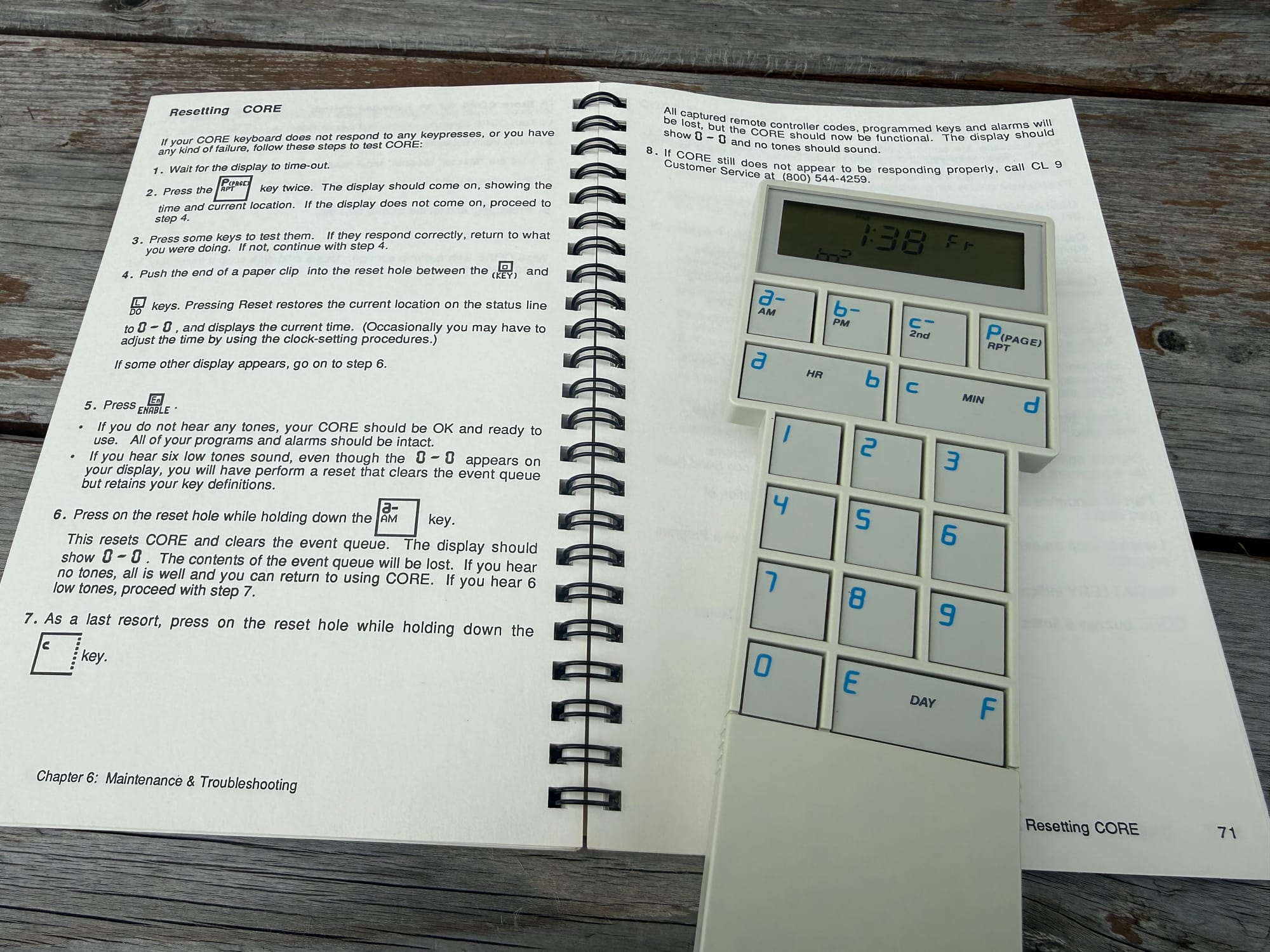
This remote is special because of the way it was designed. And it is more geekish than HP-41CX today. It uses a 6502 processor and 32 KB of static RAM together with a 4-bit processor serving the keyboard, display, and real-time clock.
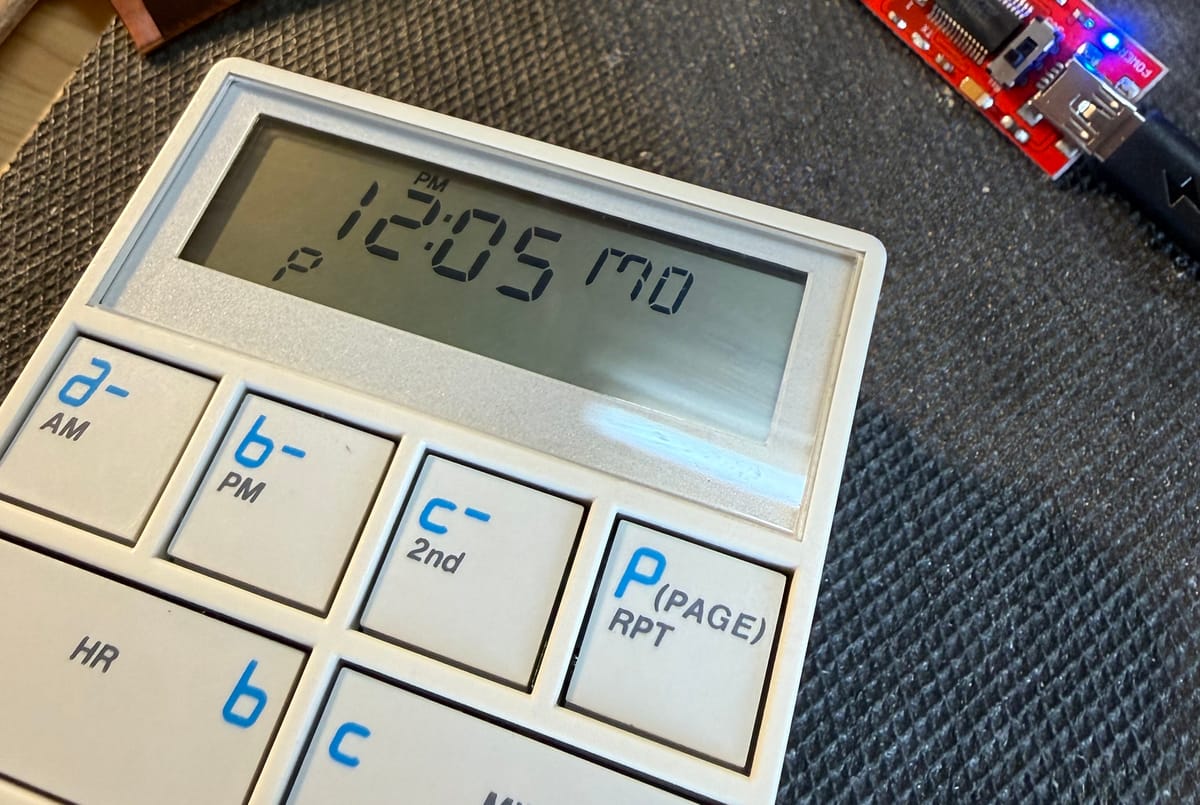
I collect historical calculators. And what does that have in common with this universal remote? Nothing — except that I found it while browsing eBay for an HP-41CX full-nut calculator.
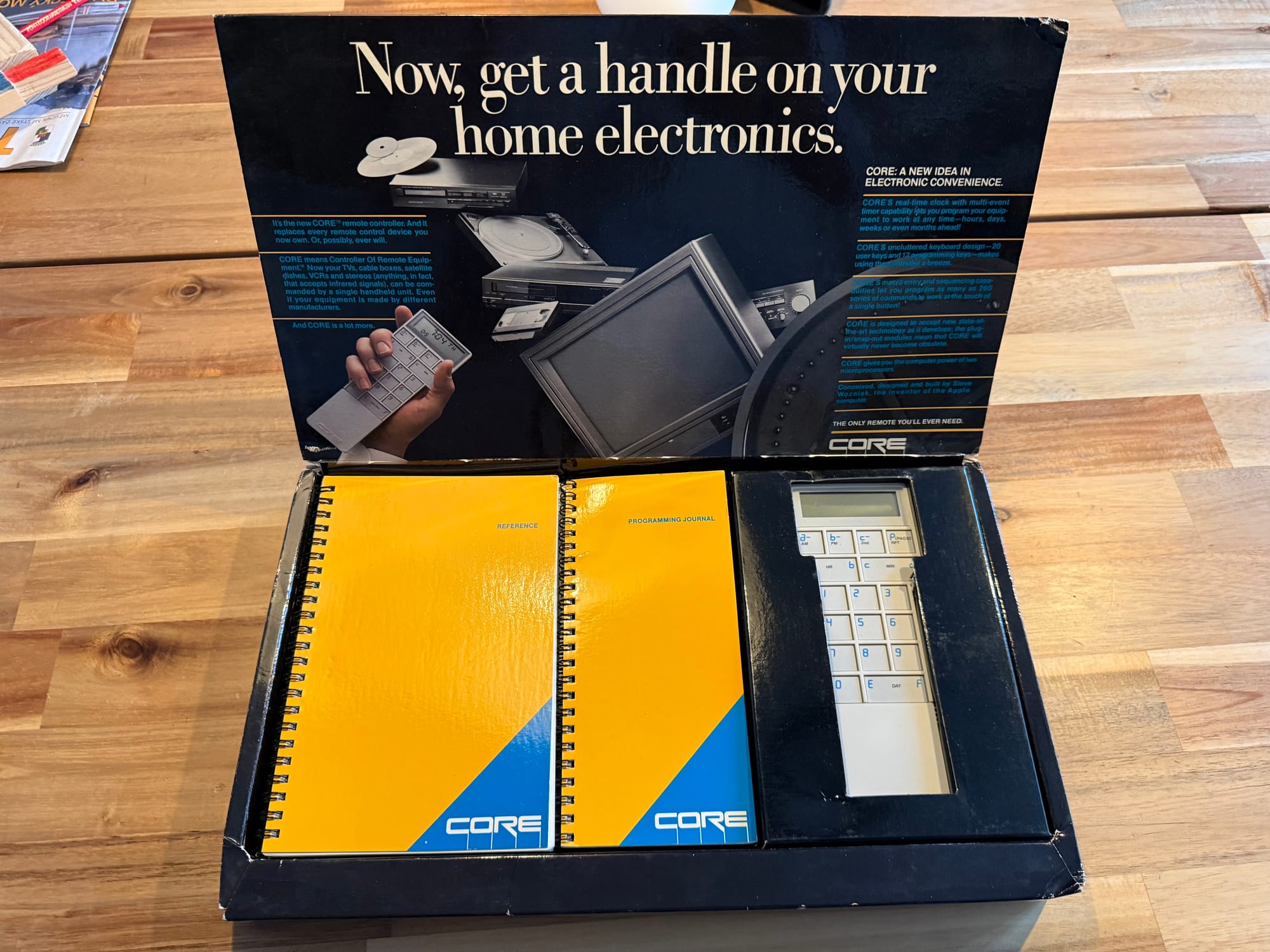
This remote is special because of the way it was designed. And it is more geekish than HP-41CX today. It uses a 6502 processor and 32 KB of static RAM together with a 4-bit processor serving the keyboard, display, and real-time clock.
Uploading the firmware
I bought a CL9 Core on eBay and started resurrecting the device. The code is stored in RAM backed up by a coin-cell battery. If the battery dies, the firmware is lost and needs to be uploaded again.
There are several applications that can communicate with the device, mostly written for DOS. I managed to run them using DOSBox-X on an Apple Silicon MacBook, but it was a pain, so I wrote a simple utility in Go.
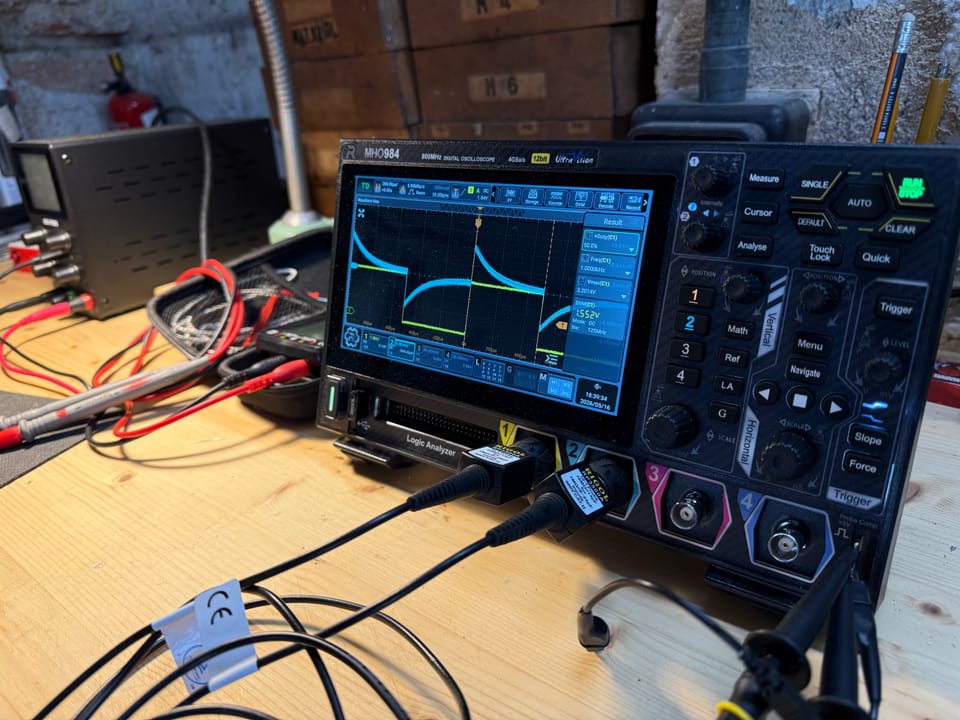
I got it working again - but only for one day. The next day it failed in a more serious way: no activity on the display, just beeping something in Morse code, probably “.–.”.
I started collecting as much information as I could to gain at least a basic understanding of how it works. Let me share these resources with you in case you ever run into a similar situation.
The Patent is your good friend
Fortunately CL9 guys (probably Wozniak in person) decided to make the technical documentation part of the patent document.
For convenience, the document is also here:
In the patent you will find not just the idea behind this product, but also code listing in 6502 assembler and complete scheme. I stitched the several pictures together to get the whole scheme on one page:
Components
I opened the remote to replace the coin-cell battery:
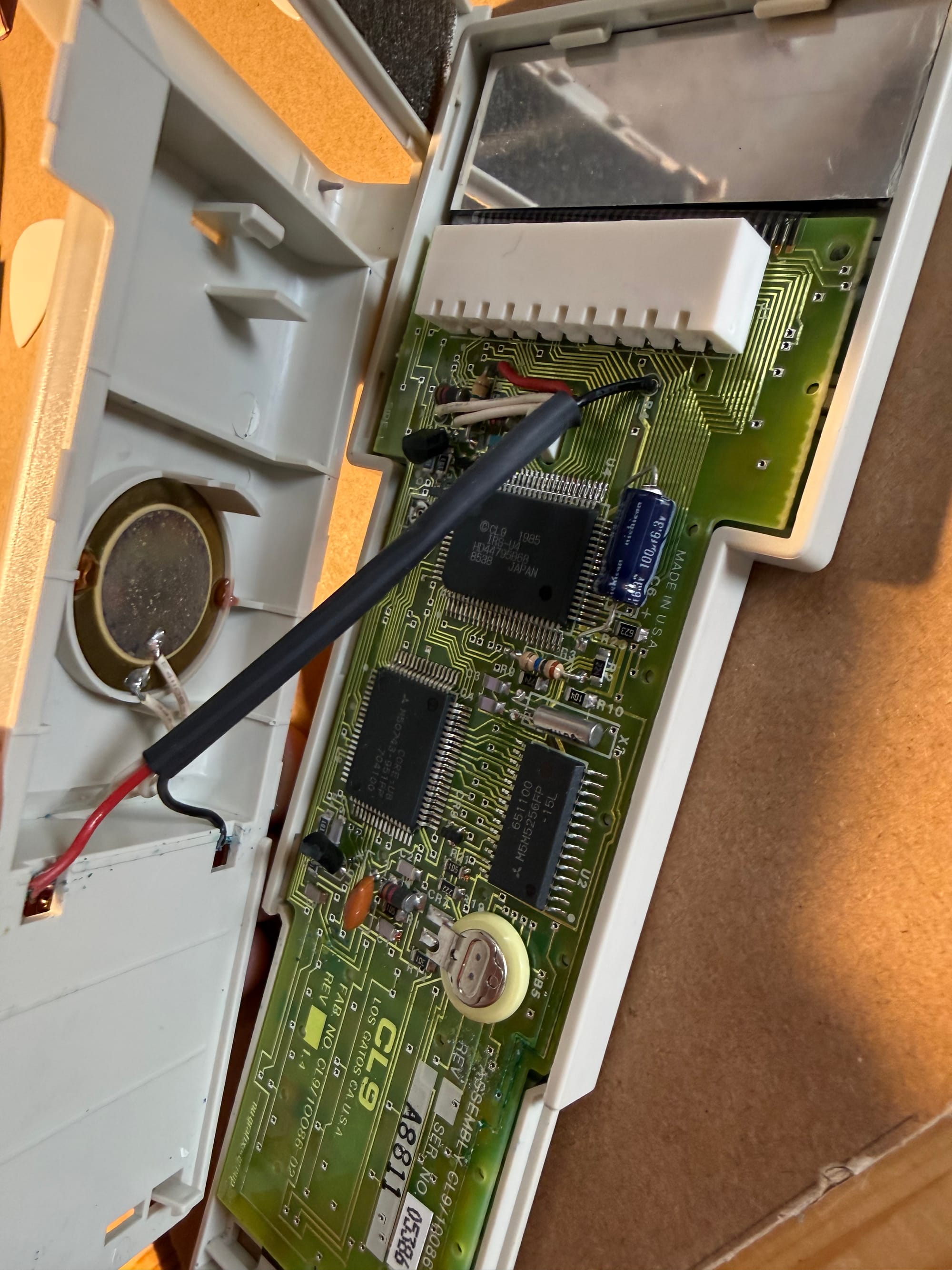
And also to find out which components are inside and found some datasheets. I am attaching them here, maybe you will find them useful when repairing the device:
Useful information on the web
Very useful webside which can help you to ressurect your device by providing firware files and needed utilities (for DOS) is this one:


The firmware which I use is also attached here togehter with instructions how to load it:
Happy-end
At the end, I did not need to debug the device. When I returned to it after a few weeks, I realized that the temperature was probably the issue. My workshop is not heated and was around 13°C during my first tests. Now, at the beginning of summer, it is around 17°C, and the device simply works. But for even better display contrast, you need around 20°C…
If you found any of the information useful, incomplete, or otherwise noteworthy, please let me know. I’m very interested in your experience with this cute old-school device.