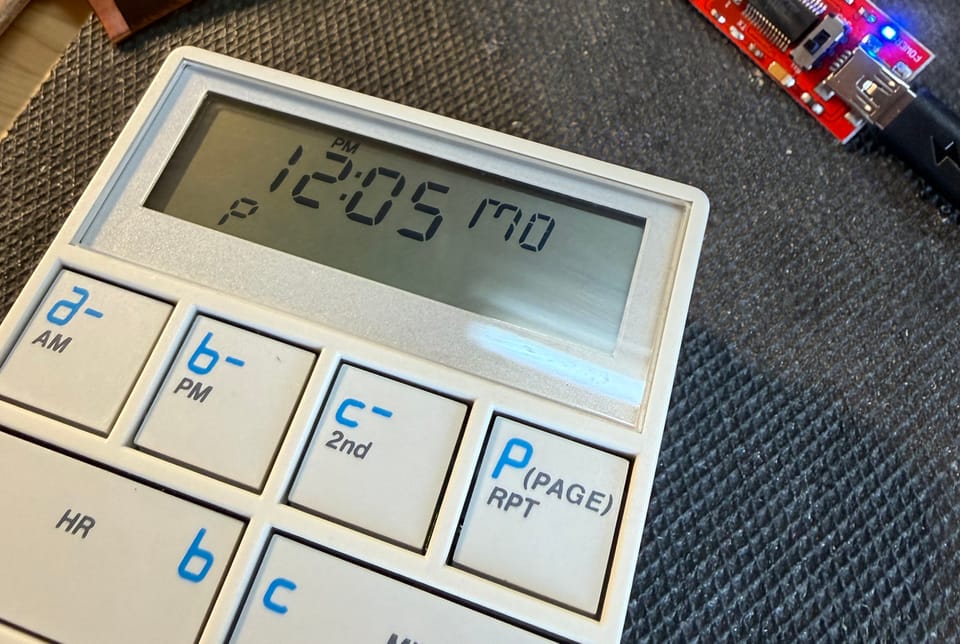
Oscilloscope to every home
I decided on the Rigol MHO984. It offers 4 channels, a logic analyzer, wider bandwidth, Wi-Fi, Bluetooth, Ethernet, and remote control capabilities.
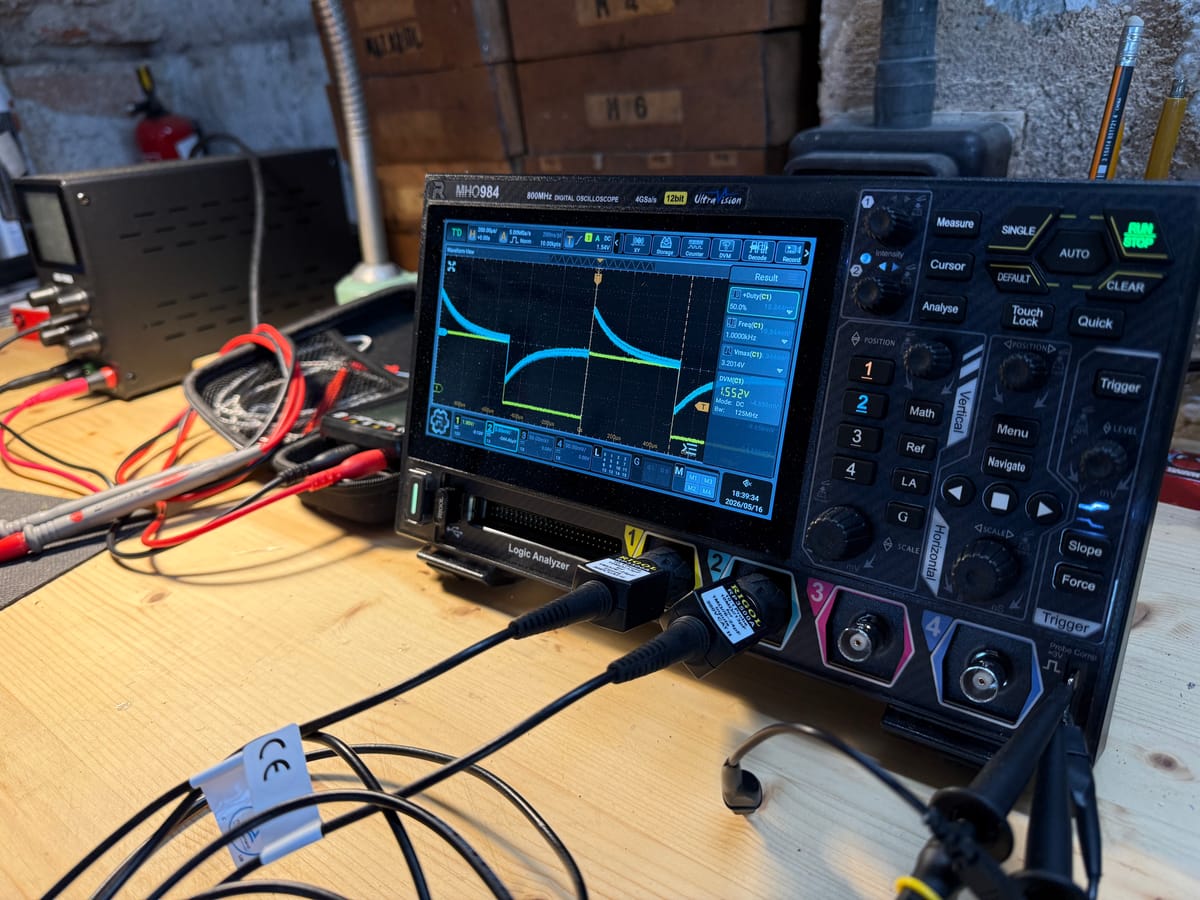
When I was describing my journey with the CL9 Universal Remote Control, I intentionally did not mention one thing. To diagnose the issue I encountered, I bought an oscilloscope. With only a multimeter, I felt blind. There was no way to check the signals inside the remote control.
At first, I looked at cheaper models like the FNIRSI DPOS350P — 2 channels, a signal generator, and a few other features. It is marketed as a “4-in-1” device. But then I changed my mind. This would be my first device of this kind, and I wanted something that would serve me for years and still be good enough in the future.
After some consultations, I decided on the Rigol MHO984. It offers 4 channels, a logic analyzer, wider bandwidth, Wi-Fi, Bluetooth, Ethernet, and remote control capabilities.
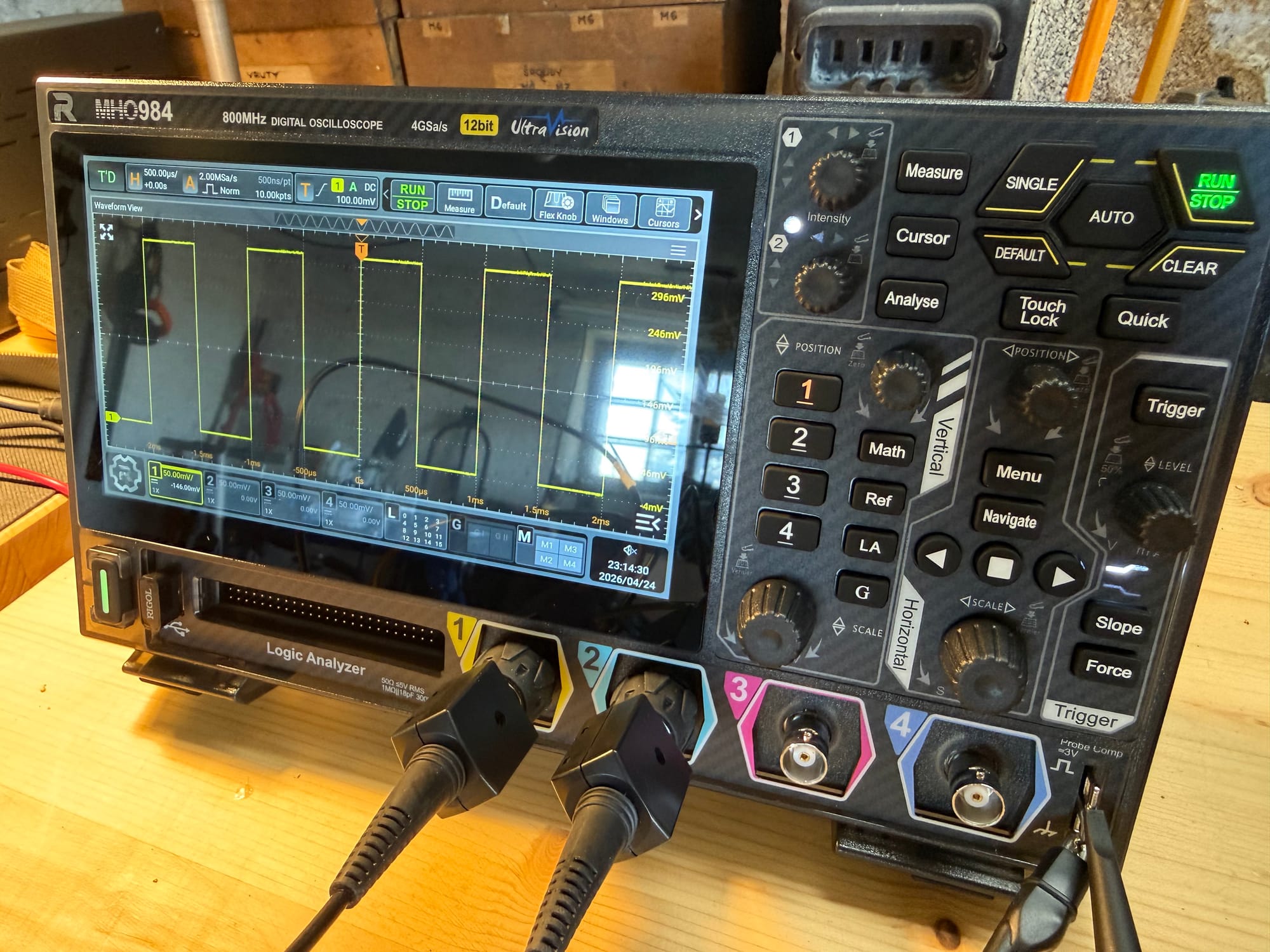
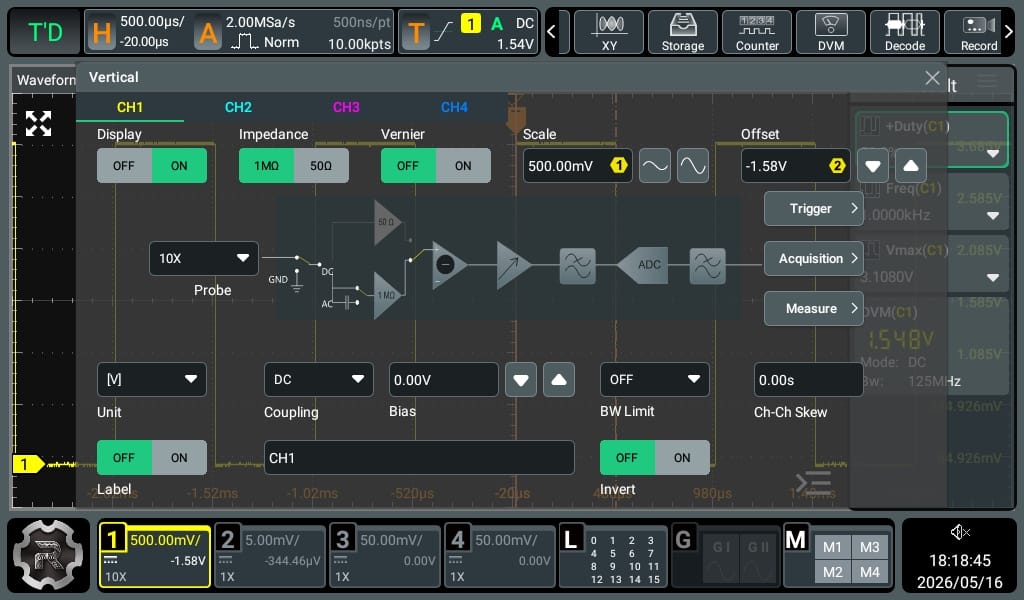
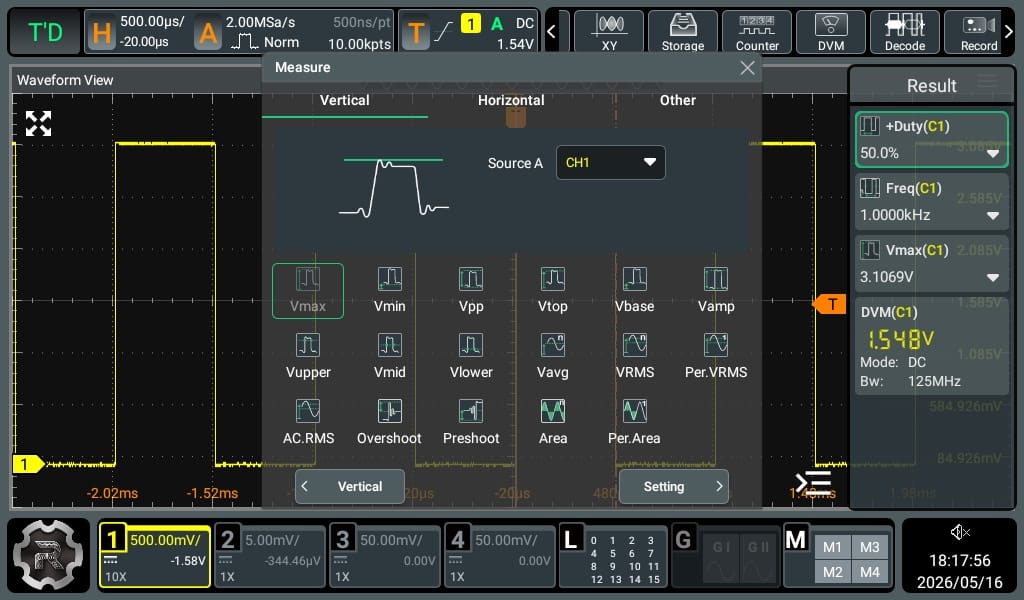
The basic functionalities are easy to use and I was able to use it in a minutes. Advanced features needs some manual reading to understand how it works. Fortunantely there is quite extensive documentstion available and UI is quite descriptive.
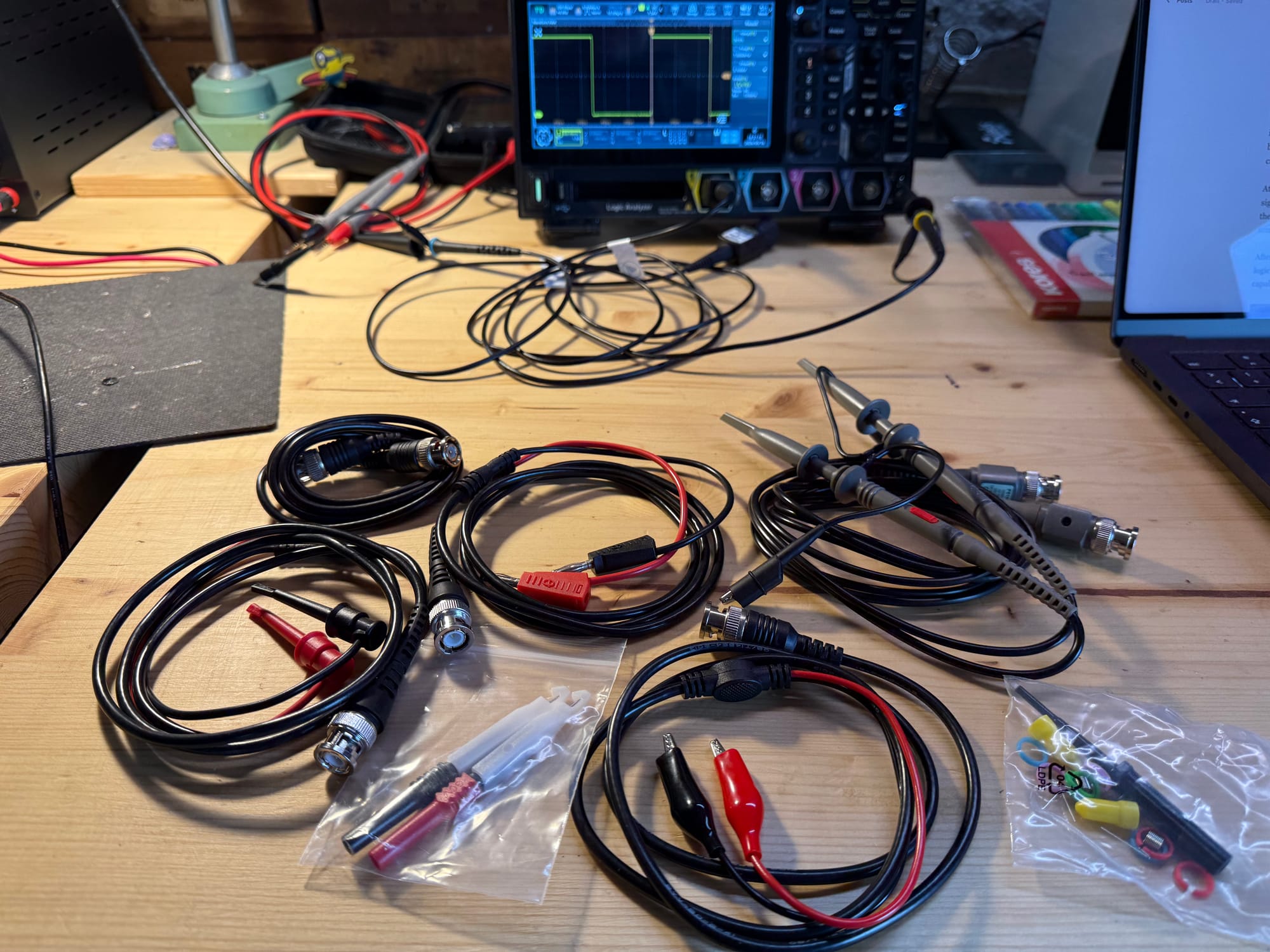
The probes which are delivered with the device are ordinary 10x with hook or pin and I ordered a few others from Aliexpress to have wider options how to connect it to the circuits.
The device is also delivered with WiFI/Bluetooth USB stick so out-of-box you can connect it to WiFi and control it remotelly.
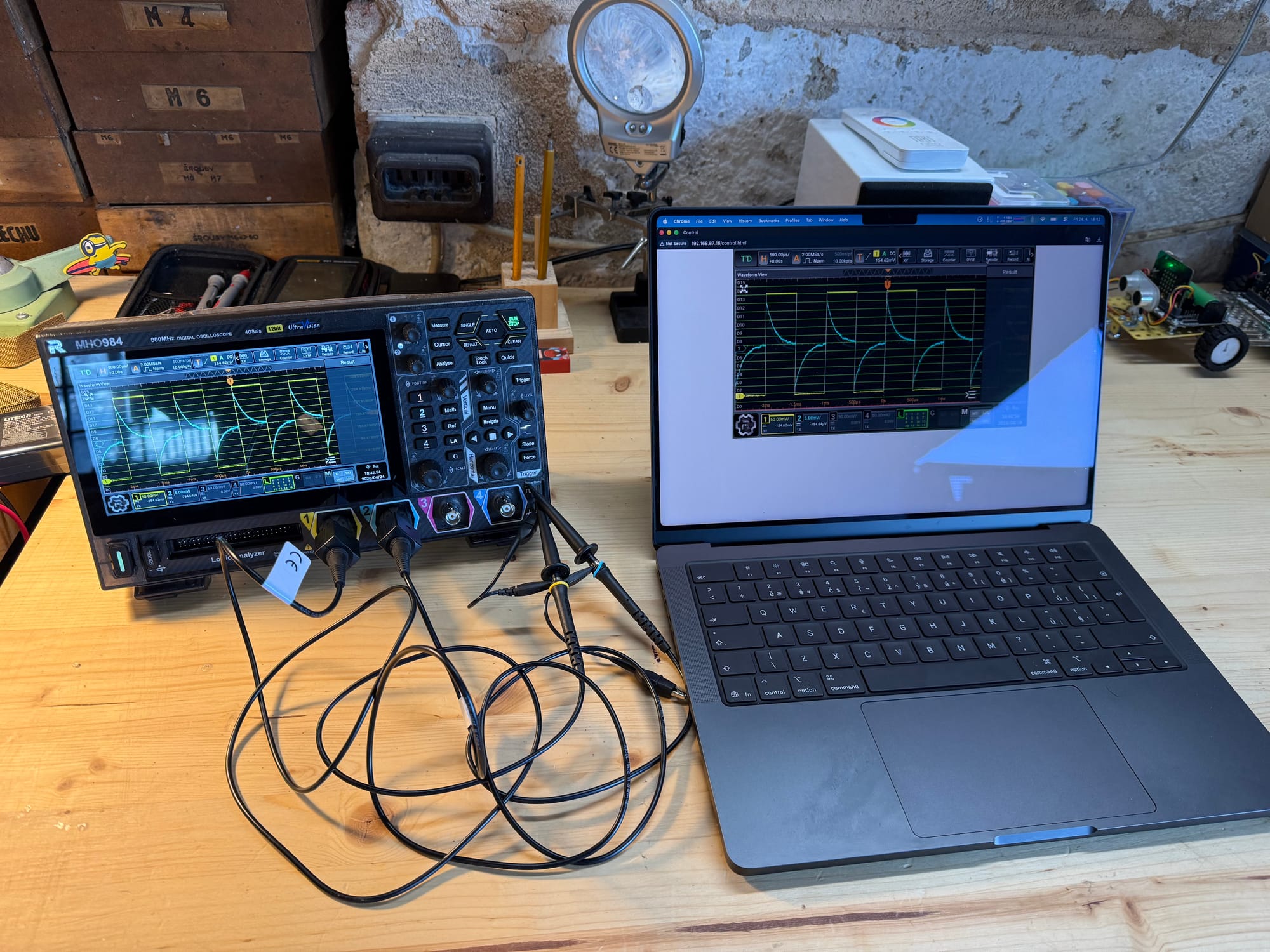
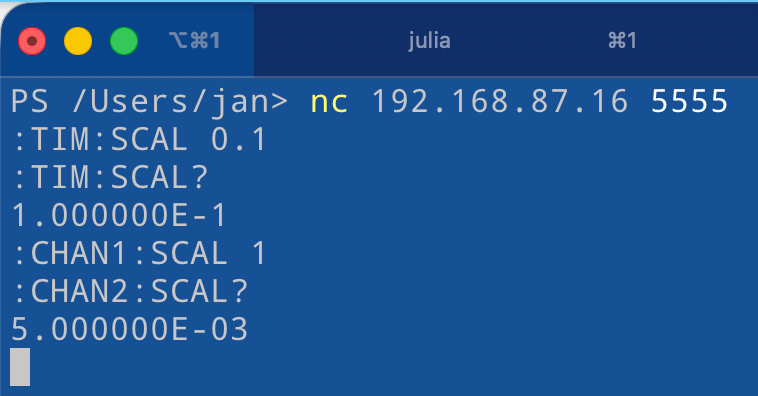
You can point your browser to the oscilloscope, or you can simply send the SCPI command from a terminal via netcat:
It is quite funny that in the end, when I unpacked the new oscilloscope and took the CL9 to repair it, it turned out that it just needed to be operated in a warmer environment and then it worked fine. However, in the past I needed to visualize some signals and analyze I2C communication, and I had no way to do it. Now I am prepared.