
IR Deep(er)dive
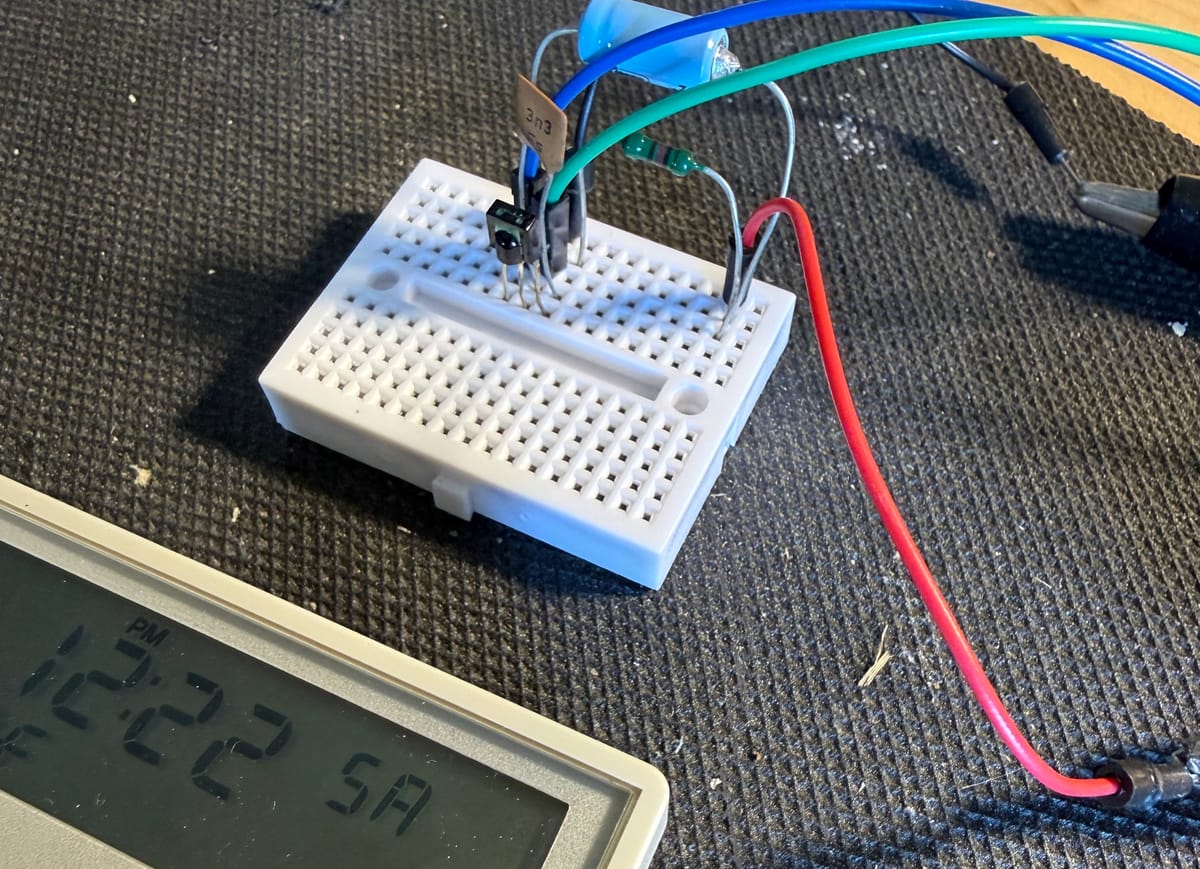
Now I have a working CL9 Core Universal Remote and an oscilloscope. My next idea was to understand how IR codes are stored in the CL9 so I could program new IR codes for remotes that I no longer have or that are damaged.
To start with something simple, I decided to first understand how the whole IR circus actually works. I let AI explain the common standards to me — like NEC or Sony — and then I wanted to see the signals with my own eyes. Fortunately, I already had the oscilloscope. What I was missing was an IR photodetector that would allow me to detect infrared signals.
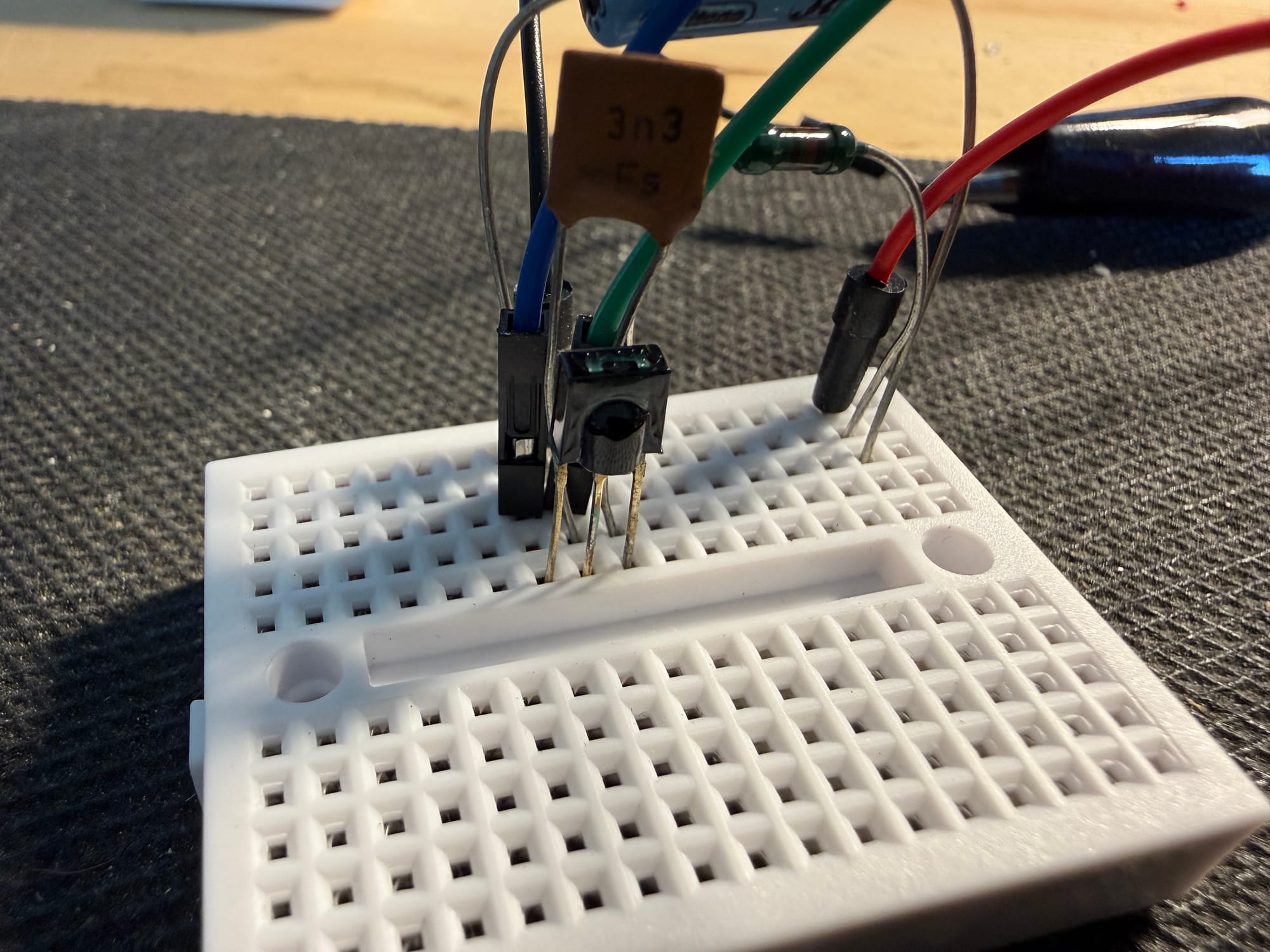
And just a minute after I started thinking about finding and buying one, my son found some old electronic components from a remote-controlled spider toy. And there was “something” able to detect remote control commands. No label, nothing. I guessed it was probably something cheap and common, like a TSOP1738. Fortunately, based on my tests, it turned out that at least the pinout of the component matched the TSOP1738.
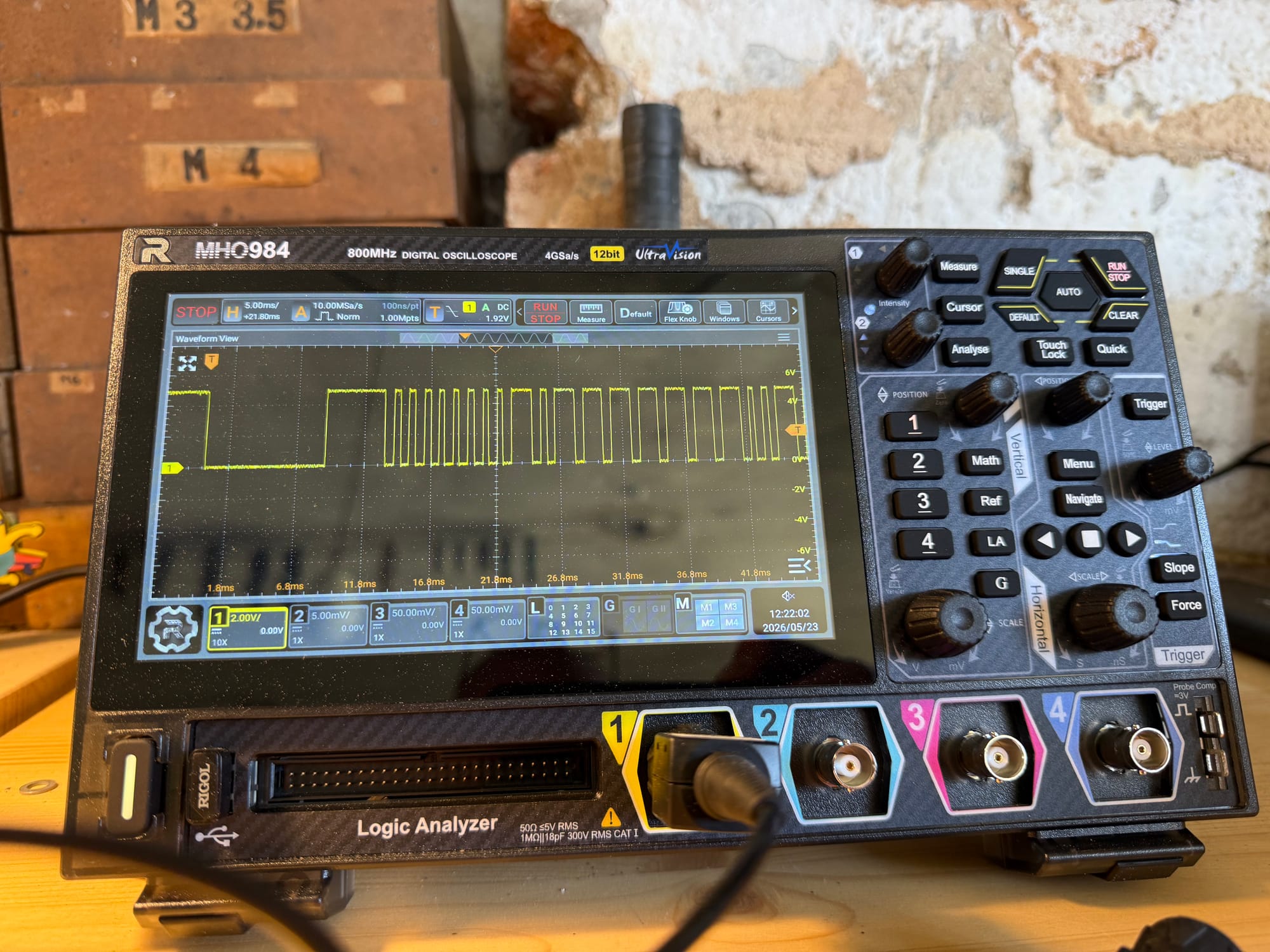
So I made my first tests and successfully captured a complete IR command using the Rigol oscilloscope. For the Rigol, I vibe-coded a Julia program to download the waveform over the SCPI interface into a JLD2 file, and then wrote another Julia program to decode the waveform into bytes.
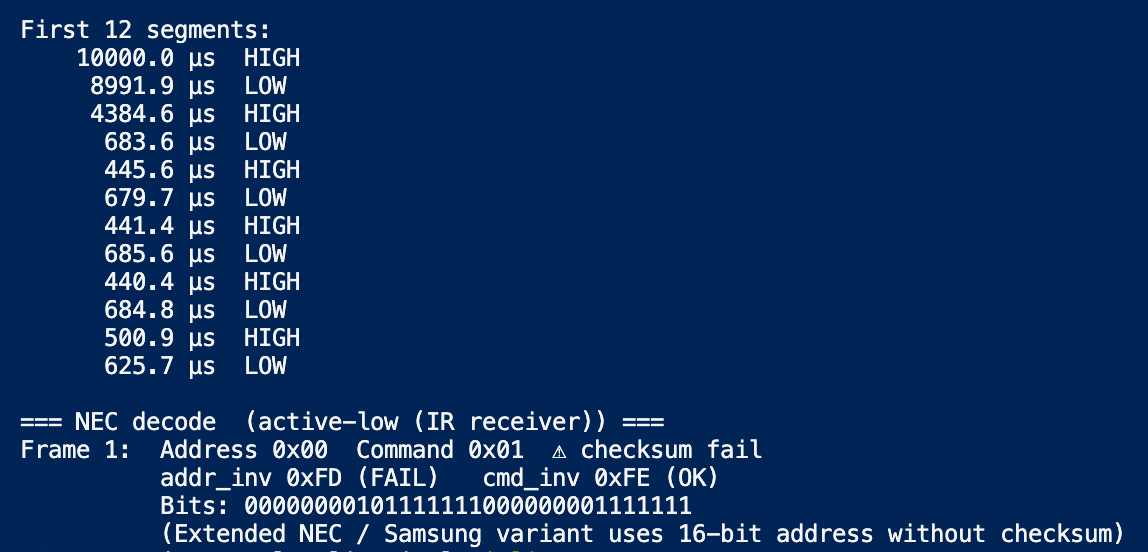
A few years ago, this would have been a whole-weekend project. Today, it took just a few iterations with Claude. Now that I know what a given command looks like, the next step will be to understand how it is stored in the CL9!