My Small Rebellion Against ‘Everything as a Service’
How a tiny Intel N150 machine running ZimaOS became my practical playground for self-hosting, Docker, photos, automation, media, and personal tools.
For years, the dominant answer to almost every computing need has been the same: put it in the cloud, subscribe to a service, and let someone else operate it. The convenience is good, but I have gradually become attracted to the opposite idea: keeping useful services at home, understanding how they work, and retaining control over both the software and my data.
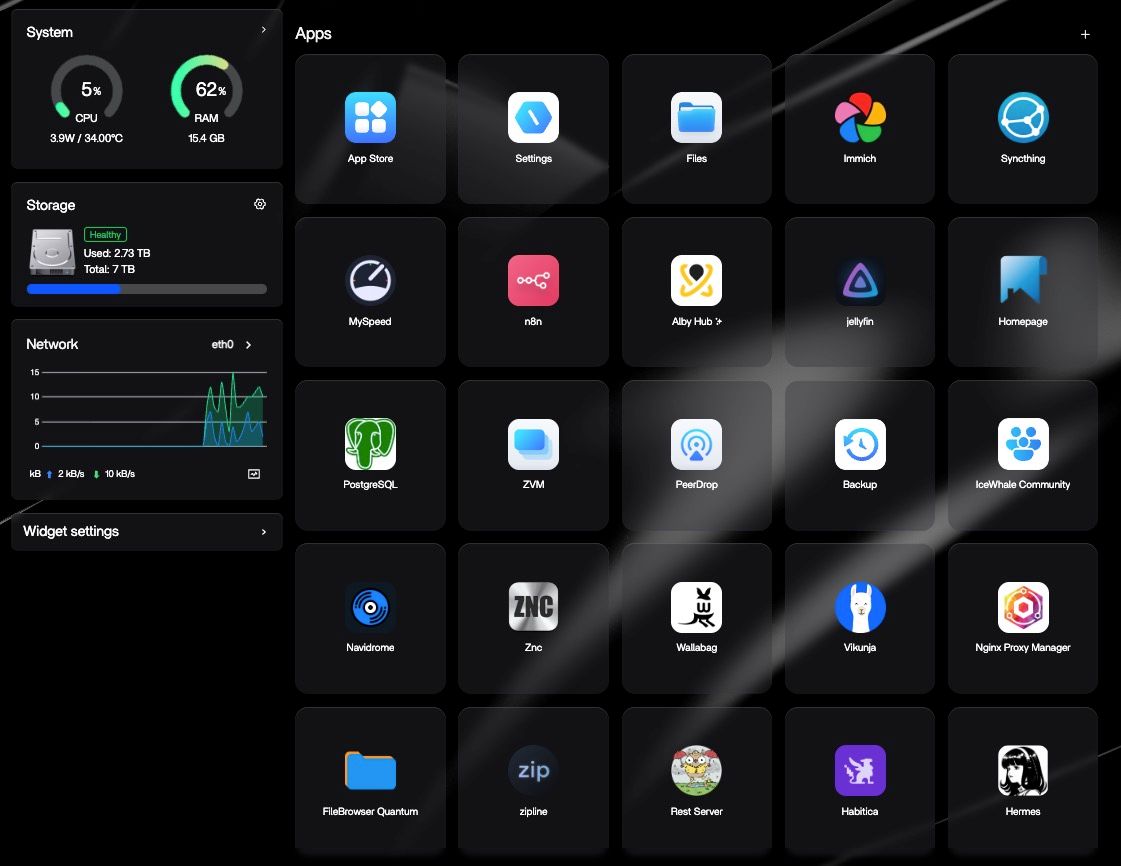
That idea eventually turned into a small self-hosting experiment. I bought a compact computer with an Intel N150 processor and 16 GB of RAM, then equipped it with a 1 TB SSD and a 4 TB hard drive. It is modest hardware, but that is part of the appeal. A home server does not need to be a noisy rack full of enterprise equipment to be useful.
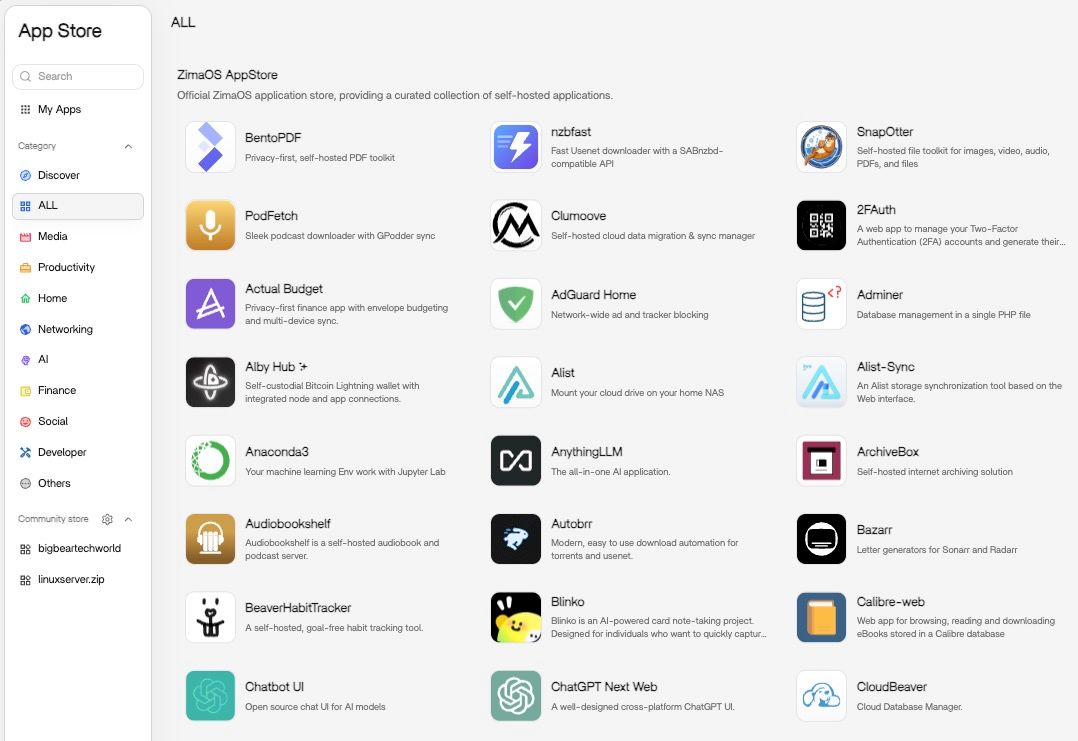
I chose ZimaOS as the operating system. I already liked Docker and its lightweight approach to isolation, and ZimaOS gives me a pleasant interface on top of that ecosystem. It makes trying a new service feel inexpensive: install it, experiment with it, keep it if it earns its place - or remove it if it does not.
Immich: the application that started it all
The first application I installed was Immich, and it immediately justified the entire project. It is an excellent tool for backing up, browsing, and searching my photo library. It offers the kind of polished experience people normally associate with a large cloud service, while the photographs remain on hardware I control.
There is an important distinction here: self-hosting an application is not automatically the same thing as having a proper backup. Important photos still need a sensible backup strategy beyond this single machine. Even so, Immich gave my home server its first clear, everyday purpose.
Then the applications started multiplying
Once Immich was running, the rest followed quickly:
- n8n became the engine for household workflows, integrations, experiments, and various AI agents. It is especially satisfying to automate something without having to send every piece of the workflow through another hosted platform.
- Navidrome is, for now, an experiment in replacing Spotify. I am not claiming that the transition is complete, but having my own music collection available through a modern interface makes the idea much more realistic.
- Syncthing synchronizes files among the many devices I use. Those devices span Linux, macOS, Windows, iOS, and Android, so a tool that is not tied to one vendor’s ecosystem is particularly valuable.
- Jellyfin turned watching films into something better than pointing VLC at a shared folder. A library, metadata, progress tracking, and a proper interface make the same files feel like an actual media service.
- Vikunja became our household task manager. It replaced Remember The Milk, a service I had liked for a long time, while giving me a tool that runs under my control.
- Habitica helps motivate both my sons and me. Gamification and rewards make resolutions and positive habits more tangible—and a little more fun.
- Hermes is my next attempt, after OpenClaw, to understand what a personal AI agent can genuinely be useful for. Running it alongside my own workflows and services makes that exploration much more interesting than treating AI as yet another isolated website.
The freedom to try—and to stop
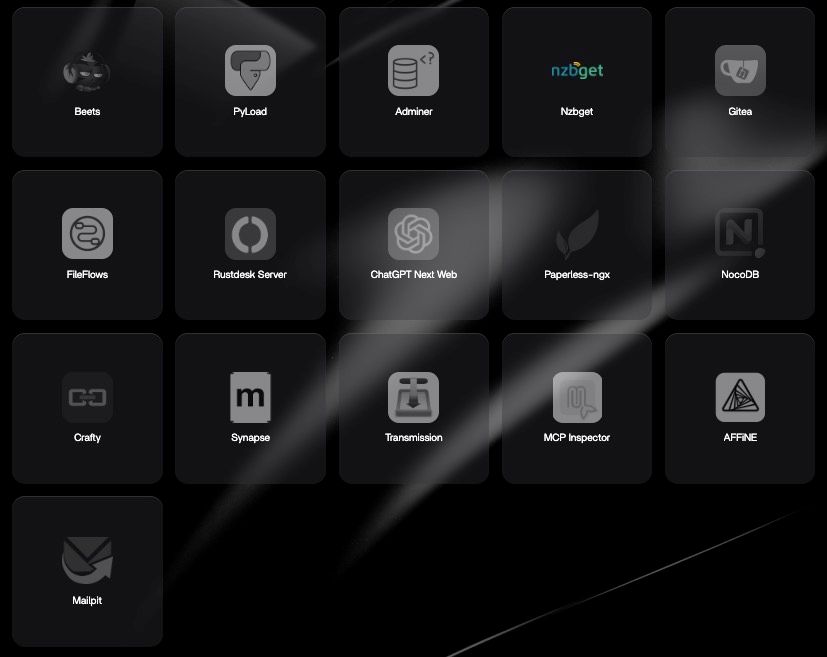
Those are only the applications that currently stand out. I have installed many others, tried them, and deleted them. Some were interesting but unnecessary. Others remain switched off because the right time to use them has not arrived yet.
That is not failure; it may be the most important feature of the whole setup. Self-hosting gives me a low-cost laboratory. I can explore an idea without entering another subscription, committing my data to another platform, or restructuring my habits around a product that may disappear or change direction.
Not anti-cloud—just pro-choice
I do not think everything should be self-hosted. Cloud services solve some problems, and maintaining software has a cost in time, electricity, updates, security, and backups. The point is not to reject the cloud on principle.
The point is to have an alternative.
This small N150 computer has become my counterweight to the idea that every useful capability must live in someone else’s data centre and arrive as a monthly service. It is a photo library, an automation platform, a media server, a synchronization hub, a task manager, an AI laboratory, and—perhaps most importantly—a place where I am free to experiment.